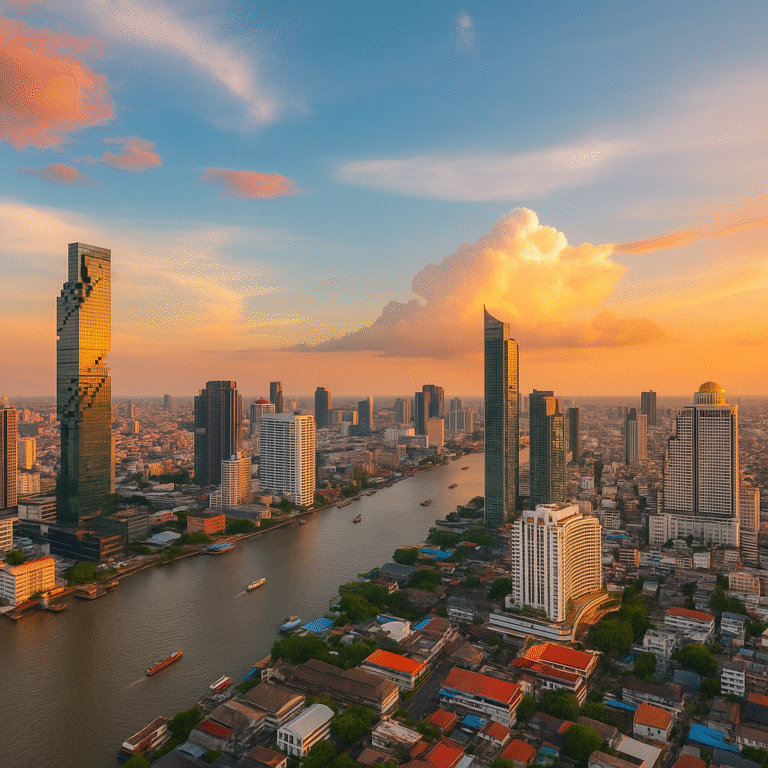
If you’ve been asking how foreigners can buy property in Thailand, this guide by Act & Align Advisor walks you through the regulations, ownership options, and investment paths for 2025.
Whether you’re interested in a condo or a house, our goal is to help you make your purchase smooth, legal, and secure.
Can Foreigners Purchase Real Estate in Thailand?
Yes, foreigners can buy property in Thailand, but under specific conditions. Your approach depends on whether you’re investing in a condominium, a house with land, or through a registered company or investment program.
Eligible ownership routes include:
- Acquiring a condominium unit under the 49% foreign quota rule,
- Entering a long-term lease agreement for land or a house,
- Holding property through a properly structured Thai company with majority Thai shareholding,
- Investing under an approved program, such as Section 96 Bis, that allows residential land ownership after meeting investment conditions.
Restrictions to note:
- Freehold land ownership is generally limited to Thai nationals.
- Houses built on land may require legal structures to own lawfully.
Buying a Condominium, The Most Straightforward Option
For most international buyers, purchasing a condominium is the simplest way to own property in Thailand.
Key advantages:
- You receive full freehold ownership once the sale is registered,
- You can buy in any location including Bangkok, Phuket, Chiang Mai, or Pattaya,
- Condos eliminate land ownership complications since you own the unit, not the land title.
Important legal points:
- The condominium’s total foreign ownership cannot exceed 49% of saleable area,
- All purchase funds must be transferred from abroad in foreign currency and documented with a Foreign Exchange Transaction Form,
- Confirm that foreign quota is available before making a reservation payment.
Tip: Always verify the foreign quota and title deed before signing any agreement or transferring money.
How Foreigners Can Buy a House in Thailand, Legal Options
Owning a house with land is more complex but still possible with proper planning and compliance.
Option 1, Long-Term Lease
- Lease term up to 30 years, with possible renewals bringing total use to 90 years,
- The foreigner holds rights to use and occupy, but not to own the land title,
- Renewal terms must be stated clearly in the lease agreement.
Option 2, Thai Company Ownership
- A Thai limited company holds the land, with at least 51% Thai shareholders,
- Suitable for foreigners who operate genuine business activities,
Option 3, Investment Program under Section 96 Bis
- Foreigners investing at least 40 million THB in approved assets can qualify,
- After investment approval, may hold up to 1 rai of residential land,
- The investment must be maintained for at least 3 years,
- Legal and financial structuring should be handled by professionals.
Option 4, Inheritance from a Thai Spouse or Family Member
- Possible under Section 93 of the Land Code,
The foreign heir may be required to sell or transfer the land under certain conditions.
Government Programs and Incentives for Foreigners
Long-Term Resident (LTR) Visa
Thailand’s LTR Visa supports long-term settlement for investors and professionals.
Main benefits:
- 10-year visa validity with work authorization,
- Faster immigration processing,
- Lower personal income tax at 17%,
Eligibility for family dependents.
Eligible categories:
- Wealthy global citizens,
- Wealthy pensioners,
- Work-from-Thailand professionals,
- Highly skilled professionals.
Land access by investment:
Qualified LTR holders may be allowed to own up to 1 rai of residential land, with an investment of 40 million THB held for 3 years, depending on government approval and regulations.
Step-by-Step, How to Buy Property in Thailand
- Choose your ownership path, such as condo purchase, leasehold, Thai company, or Section 96 Bis.
- Arrange funds and financing, ensuring all foreign transfers are properly documented.
- Perform legal due diligence, reviewing the title deed, ownership status, encumbrances, and building permits.
- Sign and register agreements, at the Land Department with required documents.
- Pay applicable fees and taxes, and register ownership or lease rights officially
Add Your Heading Text Here
Popular Locations for Foreign Investors
Location | Typical Price Range (THB/sqm) | Buyer Profile | Why It’s Recommended |
Bangkok | 100,000–200,000 | Professionals, investors | Strong rental market, high liquidity, modern lifestyle |
Phuket | 80,000–150,000 | Retirees, lifestyle buyers | Beachfront living, tourist economy, rental opportunities |
Chiang Mai | 50,000–80,000 | Digital nomads, retirees | Affordable cost of living, cultural attractions, pleasant climate |
Pattaya | 60,000–120,000 | Vacation buyers | Close to Bangkok, vibrant expat community, easy accessibility |
Common Pitfalls to Avoid
- Using nominee shareholders to acquire land, which is illegal and high risk,
- Ignoring the foreign ownership quota of condominium projects,
- Transferring funds domestically without proper FET documentation,
- Failing to verify the title deed and legal ownership status,
- Signing unclear lease contracts without renewal clauses or exit terms.
Add Your Heading Text Here
Thailand continues to be one of the most attractive markets for foreign property buyers, offering both lifestyle and long-term investment potential. Whether you’re exploring how foreigners can buy a house in Thailand or choosing a condominium purchase, professional guidance is essential.
Act & Align Advisor ensures your property purchase is legal, secure, and fully compliant with Thai regulations.